
The Four Faces of Burnout: Body, Mind, Hormones, and Soul
Burnout isn’t just about working too much. It can live in the body, the mind, our hormones, and even the soul. In this piece, I explore the four faces of burnout — physical, psychological, adrenal fatigue, and misalignment — and how each one shows up in our lives.
Burnout isn’t just about doing too much. It’s not just something that happens to people who hate their jobs or work 100-hour weeks. Burnout wears many faces — and some of them are deeply misunderstood.
In my work as both a chef and now a coach in the helping profession, I’ve come to see burnout not just as exhaustion, but as a signal — a message from the body, the mind, and the soul — that something needs to change.
Here are four kinds of burnout I’ve personally experienced, and that I see over and over again in the people I work with:

1. Physical Burnout
Physical burnout is the kind most people recognize first — it’s raw, unfiltered exhaustion. Sometimes, it can be fixed with a vacation or a few good nights of sleep. But other times, it’s not that simple.
It’s common in high achievers — the ones who love what they do and forget to rest. But it also affects people who don’t love their work — those who push through because they have no choice, even when their body is screaming for a break.
Eventually, the body stops asking politely. It yells: “STOP, would ya?” And if you don’t, it just might stop for you.
I learned this the hard way.
Back when I was working as a chef during a restaurant opening, I could go for days — weeks — with barely a pause. I loved the work. But then, my body started misfiring. I experienced strange, migrating pains. Collapsed, randomly. Ended up in the ER, more than once.
Each time, the doctors ran tests. Found nothing. Sent me home. But on the third visit, a new doctor sat down and asked me about my lifestyle. I told him I was a chef. He smirked.
“When was your last day off?” he asked. I thought about it — and realized I wasn’t sure. I hadn’t taken a single day off in nearly three months. I was working 20-hour days.
The prescription? A full week of rest. I took two. And slept through most of it.

2. Psychological Burnout
Different — but not separate — from physical burnout is psychological burnout.
This is the kind of burnout that lives in the mind and heart. It’s mental and emotional exhaustion. It’s compassion fatigue. It’s the toll of holding space, navigating other people’s needs, and constantly pushing down your own.
It’s especially common in helping professions: nurses, counsellors, social workers, coaches.
Ironically, it’s not always society that ignores this kind of burnout — it’s the professionals themselves. The ones who should know better.
I say that from experience.
Even after surviving physical burnout, and studying burnout during my counselling education, I didn’t recognize it in myself. I assumed I had the tools. That I was resilient. That I knew better.
But it snuck in anyway.
As a chef, I could grind through 16-hour days for weeks. But now, as a helper? Just a few emotionally intense five-hour days left me wiped. That’s compassion fatigue.
And because I had the skills, I convinced myself I could handle it. Until, once again, I hit a wall. My system hit the brakes and said: “Enough.”
Psychological burnout, like physical burnout, can sometimes be eased with rest. But more often, it needs deeper support: consistent, intentional self-care, real boundaries, and trusted external support — a counsellor, a coach, a community. A space to breathe.
3. Adrenal Fatigue Burnout
There’s another face of burnout that often gets overlooked — one that shows up through the body’s hormones and stress response. This is sometimes called adrenal fatigue burnout.
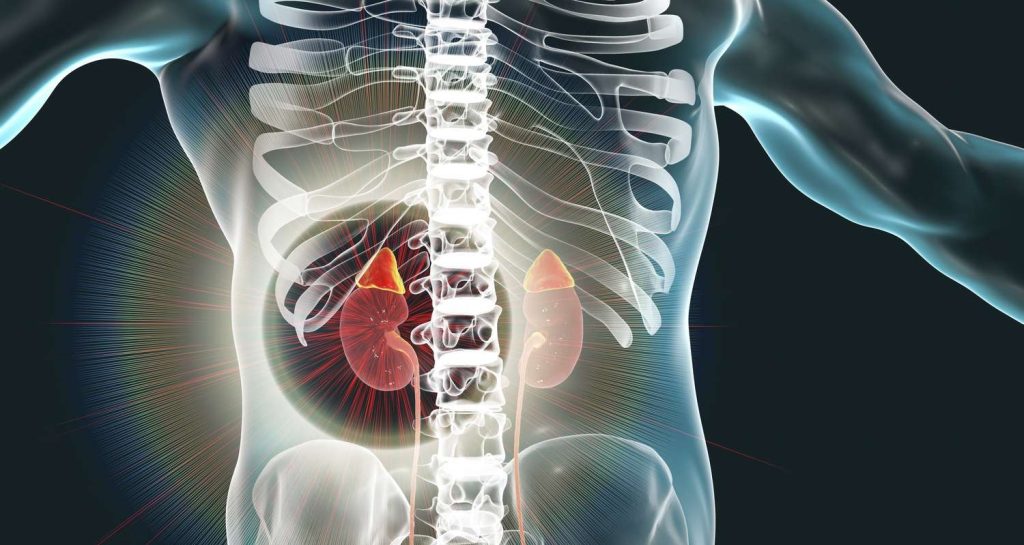
To understand it, we need a quick look at the endocrine system — the body’s “second control system.” It’s made up of glands that release hormones, which regulate growth, energy, sleep, metabolism, reproduction, and overall balance. Among them are the adrenal glands, which play a key role in stress and recovery.
The adrenal glands release cortisol, often called the “stress hormone.” In healthy amounts, cortisol helps us adapt — it fuels our fight-or-flight system, regulates metabolism, influences sleep cycles, and helps the immune system do its job.
Imagine you’re face to face with a saber-toothed tiger. Your system immediately kicks into gear, pumping cortisol, rerouting blood and energy to your limbs so you can fight or run. Once the danger passes, cortisol levels drop, and the body returns to balance.
The trouble today is… most of us don’t face actual tigers. We face prolonged, modern tigers — bosses, bills, inboxes, deadlines, the pressure of “doing it all.” These aren’t quick sprints of stress. They’re chronic, daily triggers.
And when cortisol is released in excess — day after day — it prevents the body from returning to homeostasis. Other glands begin to suffer:
– The pineal gland, which helps regulate sleep
– The pancreas, which manages digestion and blood sugar
– The thyroid, which influences energy and weight
The result? Anxiety, irritability, disrupted sleep, digestive issues, energy crashes, and yes — burnout.
So what can help?
The obvious answer would be: slay the saber-toothed tiger. But for most of us, that isn’t realistic. The better approach is to learn how to invite calm back into the system and support the body’s natural rhythms.
That might look like:
– Calming the sympathetic system through meditation, breathwork, time in nature, or gentle movement
– Nourishing the body with hydration (around 8 cups of water daily, with a pinch of mineral-rich salt in the morning if helpful), balanced meals, and nutrients that support adrenal health (Vitamin C, B-complex, magnesium)
– Balancing energy by reducing sugar spikes, keeping regular meal times, and maintaining steady sleep routines
Ultimately, adrenal fatigue burnout is the body saying: “I can’t keep running from tigers that never leave.”
Our job is to help the system feel safe again — through rest, nourishment, rhythm, and care. When we do, the body remembers how to return to balance.

4. Existential (or Misalignment) Burnout
The last kind of burnout is the one we talk about least — but it may be the most common of all. I call it misalignment burnout.
It feels just like the others: exhaustion, numbness, disconnection. You might be sleeping but never feel rested. You might have a “good life” on paper — yet feel like something’s deeply off.
If the first three live in the body and mind, this one lives in the soul. It’s rooted in axiology (our values) and existentialism (our search for meaning).
Misalignment burnout happens when you’ve drifted from your true path — when your values are no longer guiding your choices, and you’re living a life that doesn’t feel like yours anymore.
Maybe you’re crossing your own boundaries. Maybe you’re chasing someone else’s definition of success. Maybe you’re trying to be who you think you should be — rather than who you are.
Let me offer a metaphor:
Imagine your life as a path. A trail that’s uniquely yours. When you’re on it, things feel aligned. Your values are like markers, always just ahead, gently showing the way.
But life happens. Other paths appear. And sometimes you veer off.
Maybe it’s a path someone else laid out for you. Maybe it’s one you thought you had to follow. Maybe you tried to carve a brand-new one from scratch, out of fear, ambition, or confusion.
At first, it’s fine. But soon, the path gets rough. You’re exhausted, stumbling through undergrowth, hacking away at a trail that doesn’t feel right. Your values — the markers of your path — are off in the distance, waving, calling out: “Hey! Over here!”
But you shout back: “I got this!” (Been there.)
Eventually, though, you fall. You look around at the life you’ve built and realize: This isn’t it. This isn’t you. This isn’t the path you’re meant to walk.
But here’s the good news:
There’s always a way back.
Even if you’ve gone off course. Even if you’ve been in the thicket for years. Even if you’ve convinced yourself it’s too late.
You can still pause. Look back. Reconnect with your values. And begin, slowly, to return to yourself.
The detour wasn’t wasted. You learned from it. Now you carry that wisdom forward.
Burnout isn’t just about working too much. It’s about disconnection — from the body, the heart, the hormones, and the soul.
If you’re feeling tired in ways that rest can’t fix, you’re not broken. You might just be burned out in more ways than one.
Leave a Reply