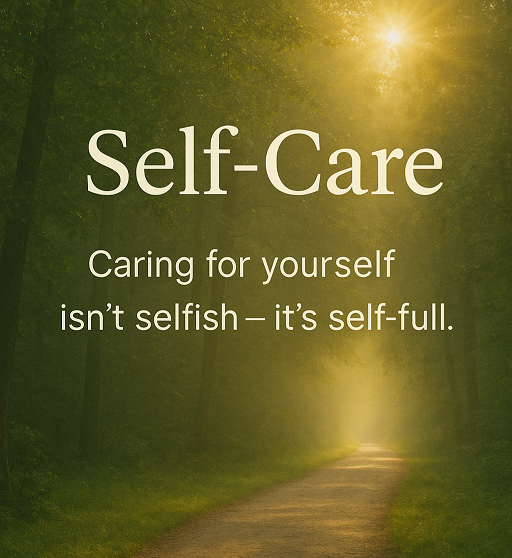
Let’s Talk About Self-Care
First, I want to ask you a couple of questions:
What does self-care mean to you?
And further — what would it be like if you cared for yourself the way you care for others?
For some, these questions may come easily. But for many, they’re surprisingly difficult. Sometimes it’s because you’re not entirely sure what self-care really means or how to even begin caring for yourself. Other times, it’s because you do know — but putting yourself higher on the priority list just hasn’t felt like an option.
Why Self-Care Isn’t Just a Buzzword
For some people, the term self-care has started to feel cliché. It’s everywhere. But the truth is, it’s showing up so much because the need is greater than ever.
With adrenal fatigue, toxic cortisol levels, and relentless anxiety, daily life for many has become pure survival mode. People are managing the best they can — layering band-aid over band-aid.
We numb.
We cope however we can — binge-watching, binge-eating, that nightly “unwind” drink, gummy, or whatever it may be — just to handle the stress that’s taken up residence in our bodies, minds, and souls.
And this numbing? Too often, we’ve mistaken it for self-care.
Don’t get me wrong — indulging from time to time can be self-care. But when it becomes self-medication, it’s no longer care at all.
So… What Is Self-Care, Really?
Let’s not overthink it. Self-care is exactly what it sounds like: the caring of one’s self.
It can look like a thousand different things, but the key is to notice whether your self-care is reactive or proactive.
Are you only taking care of yourself when your body, mind, or soul starts screaming “Stop!” — or are you caring for yourself before you reach that breaking point?
This reactive pattern is incredibly common. Many of us override our needs for the sake of others, putting ourselves third, fourth, or even last on the list — until we’re finally forced to stop.
Think of the thoughts that often get in the way:
“Self-care is selfish.”
“I don’t have time.”
“I’ll take care of it later.”
“I haven’t earned it.”
“I’m not worth it.”
If this hits close to home, that’s not a bad thing. You’re not alone. That discomfort you’re feeling? It’s simply a signal that something inside you is ready to change.
The Oxygen Mask Analogy
One of my favorite analogies for self-care is the airline safety reminder to “put your mask on first.”
Before takeoff, flight attendants remind you that if oxygen masks are deployed, you should secure your own mask before assisting others. Why? Because if you pass out while helping someone else, you can’t really help at all.
In life, the same is true. Many of us push ourselves down the priority list believing it’s for the good of others. Yet over time, it leaves us drained — less effective, less present, and often unseen in our own needs.
Taking care of yourself isn’t selfish. It’s responsible.
It’s what allows you to show up more fully — for yourself and for the people you care about.
Proactive Self-Care and Balance
A proactive approach to self-care leads to higher functioning, greater sustainability, and a more balanced, self-determined way of living.
But before you can build that, you need to understand what self-care actually looks like for you.
It’s easy to adopt someone else’s version — the bubble baths, the gym routines, the journaling trend. And sometimes, those things help. But if it’s not aligned with who you are, it won’t last.
Try This Self-Care Reflection Exercise
Here’s an abbreviated version of the Self-Care Planner I share with my student coaches:
- Create Two Columns
In the first column, list everything that nourishes and fulfills you — things that bring joy, release stress, and help you feel rested and replenished.
Examples: walking, dancing, organizing, cooking, gardening, reading, writing, taking a bath, listening to music, connecting with a friend.
In the second column, list the things that drain you — activities or situations that deplete your energy or create distress. Some of these may be necessary parts of daily life, or even things you do for loved ones, but they still take from your well-being. - Compare the Two
Look at the contrast between what nourishes you and what depletes you. Which can be adjusted or eliminated? And where can you add more of what replenishes you? - Take One Small Step
Decide on one small, realistic action you can take every day that supports your self-care plan — something that says, “I’m worth the effort.”
Coming Back to the Question
So, let’s revisit that second question:
What could your life be like if you cared for yourself the way you care for others?
Or even, what if you simply believed you deserve the same care you so freely give?
It’s not always easy. The journey can be messy. But you’re not alone in it.
If you’re ready for change, start small — take one intentional step toward your own care, and begin living your desired life.
Remember: dare to mess it up, and dare to fail forward.
Until next time — Ciao.
Leave a Reply