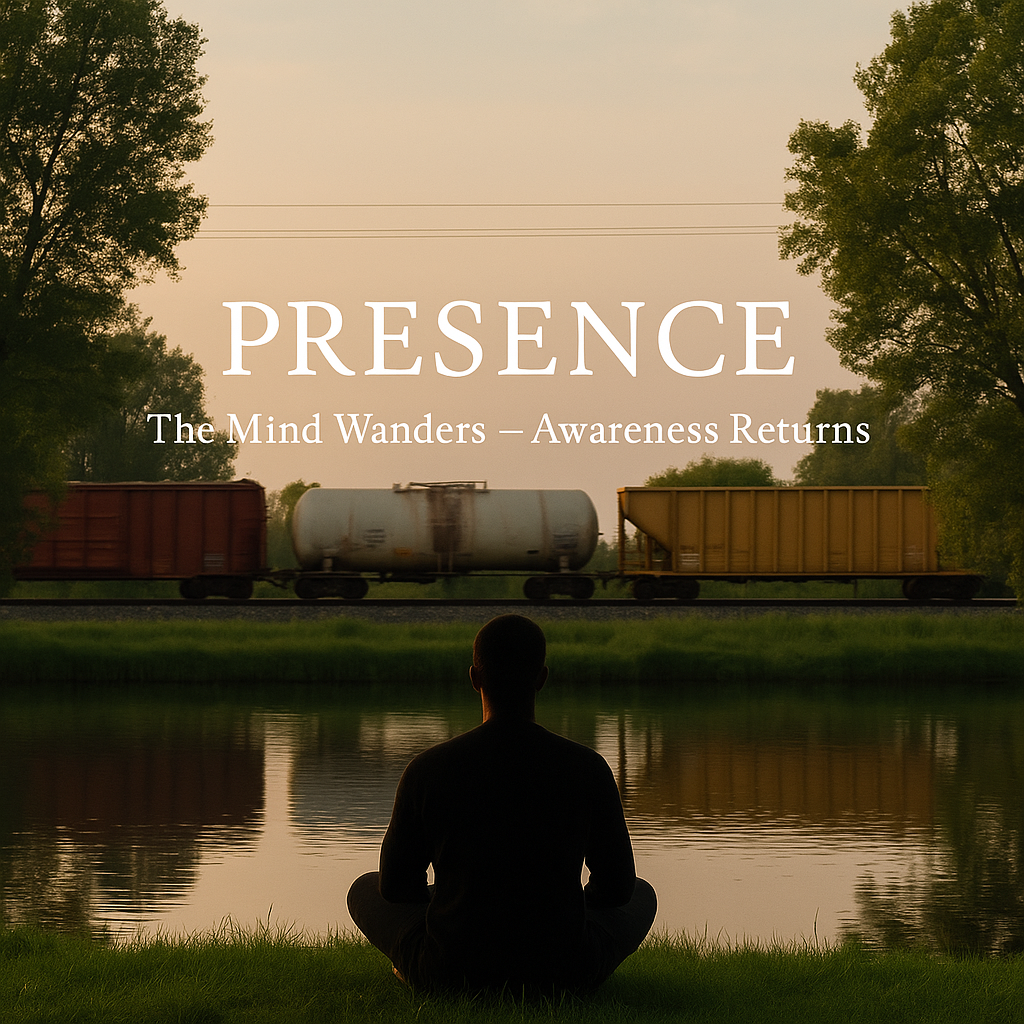
Are You Here? Cultivating Presence in a World That Pulls You Away
Are you here? I mean—really here.
This question might seem silly, but what I’m really asking is: Are you present in this moment?
To be present means to be here and now. And you might be thinking, Well, where else could I be? Sure—your physical body is here. But are you? By “you,” I mean your mind—your thoughts, your awareness.
The truth is, it’s surprisingly easy to be anywhere but here. We’re often pulled toward the future, worrying about what’s to come, or dragged into the past, replaying what’s already happened.
Have you ever had one of those mornings where, before your eyes even open, your mind is already racing—rehashing an argument or reliving a conversation? Or perhaps at night, lying awake as thoughts spin through tomorrow’s to-do list, as if mentally wrestling with them might somehow solve it all?
I understand this all too well. I also know what it’s like to be anywhere but present—especially in conversation. Someone might be sharing something meaningful, but instead of listening, I’m in my head, thinking about other things—or how what they’re saying affects me.
The Train of Thought
The mind is powerful, and thoughts can be all-consuming. Notice I didn’t say our thoughts—because thinking isn’t exactly something we do; it’s something that happens.
Think of it like this: you’re sitting on a patch of grass. In front of you, a train passes by. You can simply watch it as it goes—each car carrying something different. Some hold cargo, some grain, some coverd in graffiti. Those train cars are your thoughts.
You can observe them as they pass, or you can hop on, letting one thought pull you away. You don’t know where it’ll take you—you’re just gone, lost on that train of thought.
Being present is realizing that you can sit and watch the train go by. You can let thoughts come and go without being taken away by them.
Conscious Awareness and the “Software Update”
Easier said than done, right? The default mode for most of us is to let thoughts take over. In truth, we need a lot of our thinking to run on autopilot.
Imagine if you had to consciously control everything your mind processes! You’d go mad. Our brains constantly scan for safety and filter information to help us function.
But this also means we sometimes operate unconsciously in ways that no longer serve us. That’s why it’s valuable to occasionally “update the software.” We do that by bringing conscious awareness to unconscious thinking—by returning to the present moment.
Observing in the Here and Now
Being present isn’t only about being here—it’s about observing here.
Like the train, you can slow down and notice each car—each thought and emotion—as it moves through.
For example, you wake up already replaying a past moment. When you bring awareness to it, you can observe the stories and feelings that arise, and then decide—like the train—whether to stay with them or let them pass.
Thoughts of the past and future are just that—thoughts. They’re not what’s true right now.
Too much time in the future often breeds anxiety. Too much time in the past can feed depression. Returning to the present moment lets you observe what’s real and challenge what’s not.
The Practice of Presence
I know—it sounds simple on paper. But presence is a practice.
At first, you’ll only notice after you’ve been swept away by your thoughts. You’ll think, Ugh, why am I still doing this?
But that’s part of the process. Awareness always starts with noticing what no longer works. Over time, you’ll begin to notice as it happens—pausing, shifting, choosing differently. Eventually, you’ll notice before it happens, acting proactively rather than reactively.
That’s growth. That’s presence.
Cultivating Presence
Presence begins with practice—small, daily moments that help you step out of your head and into your awareness.
Meditation, yoga, journaling, gardening, cooking, exercise, walking in nature—all of these are presence practices.
Even a few minutes of mindful breathing or a silent pause in the shower can shift your day. Keep a notepad nearby. When you notice yourself caught in past or future thinking, jot it down. Gently remind yourself: Neither of those things exist right now.
The “Quick Sit” Practice
Here’s a simple exercise I teach called the Quick Sit. It’s a fast, grounding practice that invites you back into the present moment—anywhere, anytime.
You can use it on the bus, between meetings, or whenever you need a quick reset. It’s discreet, portable, and effective.
Step 1: Drop In (Grounding)
- Feet: Notice your feet. Whether you’re seated or standing, feel your contact with the ground—even through your shoes. Sense how the ground meets your feet and how your feet meet the ground.
- Pause judgment: Gently set aside any labels or evaluations.
- Breath: Notice your breath without changing it. Let it come and go naturally.
- Cue: When your mind drifts, ask: “Where are my feet? Where is my breath?” Then return—right here, right now.
Step 2: Check In
Simply observe: - What thoughts can you see passing by?
- What emotions are present—anger, sadness, fear, joy, shame, surprise? (You might place a hand on your heart or belly.) and this too you can observe and allow to pass.
Remember: thoughts and emotions are happening, but they are not you. You can choose how to interact with them.
Any time you find yourself pulled away—whether ruminating in bed, spiraling at night, or distracted during conversation—you can ground, breathe, and return.
Through practice, you’ll strengthen your observer self—the one who can pause, notice, and choose differently. You’ll reclaim your presence and your power to decide what’s true right now.
A Final Word
Presence takes time. The journey is messy and human—but you’re not alone. With each moment of awareness, you’re already shifting.
So dare to mess it up. Dare to fail forward.
Until next time,
Ciao.
Leave a Reply